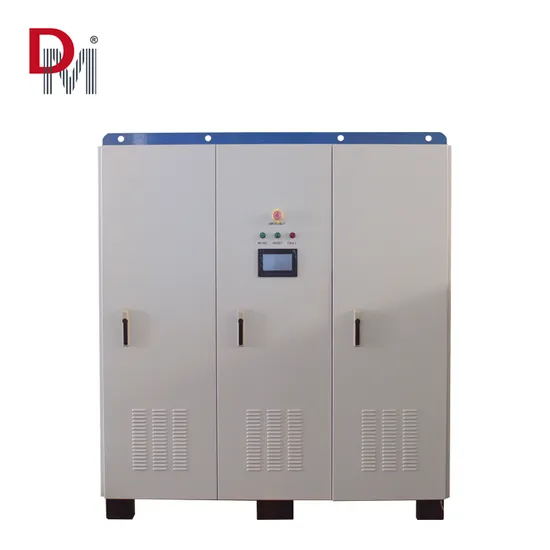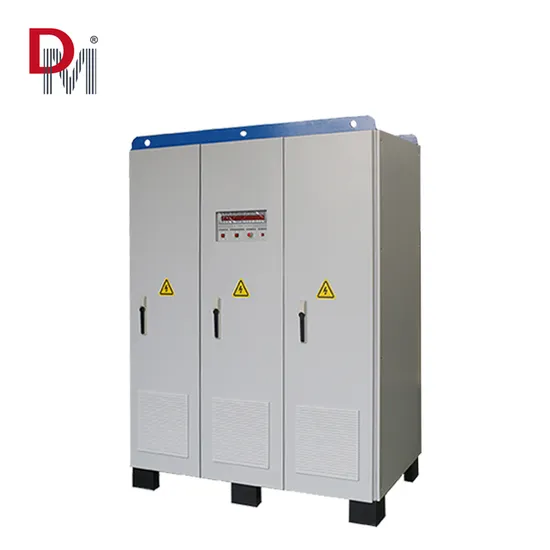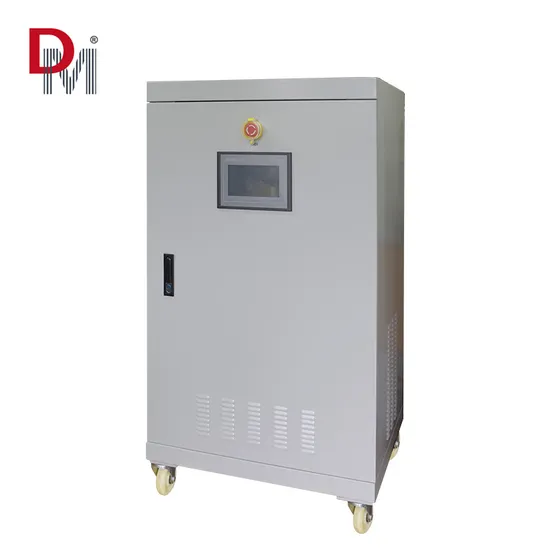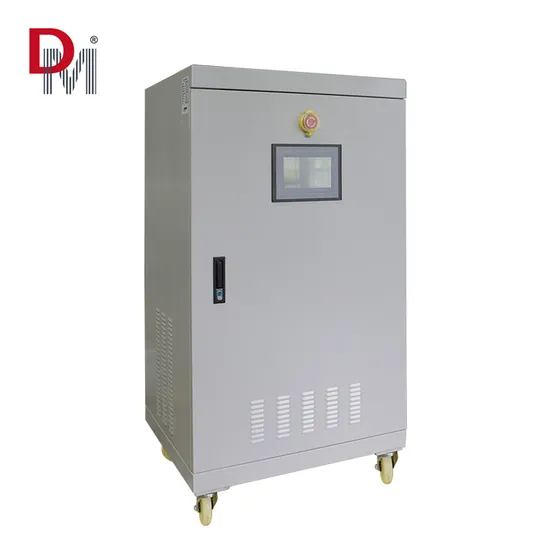
Overall process: Hydroelectric generator (fluctuating three-phase AC power) → rectification link AC-DC → DC bus buffering and voltage stabilization → inverter link DC-AC → output standard three-phase 380V AC power
1. Rectification link AC-DC (AC to DC)
The water turbine is subject to changes in head and flow rate, and the output voltage and frequency of the generator fluctuate widely.
The three-phase fully controlled rectifier bridge converts the unstable AC power output by the generator into DC power; The DC bus capacitor acts as an energy buffer, stabilizes the DC bus voltage, isolates generator side fluctuations, and ensures that the subsequent inverter is not affected by speed.
Regardless of whether the water flow is large or small, or the generator speed is high or low, the DC bus is maintained at the set voltage.
2. DC bus intermediate link
The DC support capacitor stores and buffers energy, absorbs ripple, decouples the power difference between the output of the front-end generator and the back-end, and is the energy transfer station of the entire equipment.
Under off grid conditions, there is a sudden change in load; Under grid connected conditions, power grid disturbances rely entirely on the smooth transition of bus capacitance.
3. Inverter link DC-AC (DC to standard three-phase AC)
The DSP digital controller outputs SVPWM space vector modulation signals to drive 6 sets of IGBT power transistors to switch on and off at high speed, cutting the DC voltage into high-frequency pulse sequences. Then, after passing through an LC output filter, it is restored to a three-phase AC power frequency (50Hz, 380V) with a sine waveform.
Grid connection mode: Implement phase-locked control, output voltage phase and frequency strictly follow the grid, achieving safe grid connection; Simultaneously equipped with anti islanding, overvoltage, overclocking, and low-voltage ride through protection. When the power generation exceeds the grid’s capacity, the automatic discharge circuit consumes excess electricity to protect the turbine unit.
Off grid mode: adopting V/F constant voltage and frequency control, not affected by the generator speed, outputting stable 50Hz three-phase electricity directly to the local three-phase load.
4. Whole machine closed-loop control logic
Real time collection of generator side voltage and current, DC bus voltage, and output side voltage and current.
As the water flow increases, the output power of the generator rises, and the inverter synchronously delivers more electrical energy to the outside;
The water flow decreases, the output of the generator decreases, but the inverter still maintains stable output voltage and frequency;
In case of overcurrent, overheating, overvoltage and other faults, immediately block the IGBT pulse to achieve protective shutdown.