As the core energy conversion device of the wind power system, the technical principle of the wind turbine inverter can be summarized as the following key links:
1、 Fundamentals of Electric Energy Conversion: Rectification and Inverter
Rectification process
The original electrical energy output by wind turbines is AC power, but the frequency and voltage fluctuate with wind speed (± 5Hz frequency offset, 30% voltage oscillation). The inverter first converts AC power to DC power through an uncontrollable rectifier bridge (such as a three-phase bridge circuit composed of IGBT or thyristor). During this process, the DC capacitor group acts as a buffer to absorb energy fluctuations and maintain stable DC bus voltage (such as around 1100V).
Inverter stage
Direct current needs to be further converted into alternating current (50/60Hz) synchronized with the power grid. The inverter cuts direct current into pulse sequences through high-frequency switching actions of power semiconductor switching devices (such as IGBT), and then smooths them into sinusoidal alternating current through filtering circuits (such as LC filters). Key technologies include:
Adaptive Phase Locked Loop (APLL): By dynamically correcting the switch timing through DSP, the output frequency error is controlled within ± 0.2Hz to ensure synchronization with the power grid.
Multi level topology structure: using three-level, five level or modular multi-level (MMC) technology to reduce low order harmonics (such as reducing the content of 3rd and 5th harmonics by more than 50%), making the total harmonic distortion (THD) less than 1.5%, meeting grid connection standards.
2、 Bidirectional energy management (taking doubly fed units as an example)
The doubly fed induction generator system achieves bidirectional energy flow between the stator and rotor through an inverter:
Stator side: directly connected to the power grid, outputting power frequency energy, and supporting ± 30% reactive power regulation to stabilize the grid voltage.
On the rotor side, the phase angle of the rotor current is regulated by an inverter to achieve the following functions:
Variable speed constant frequency control: By adjusting the frequency of the rotor excitation current when the wind speed changes, the stator output frequency is kept constant.
Maximum Power Point Tracking (MPPT): Optimize wind energy capture efficiency within ± 30% speed range.
Low voltage ride through (LVRT): Respond and maintain grid connection within 150ms when the grid voltage drops to 0.6pu (nominal value 60%), avoiding grid collapse caused by disconnection.
3、 Modularization and fault traversal technology
1+X modular architecture
The basic unit is 1.5MW, which can be expanded to 8MW through parallel connection, supporting phased construction and flexible expansion. For example, the Zhangbei 8MW unit adopts this architecture to achieve an equivalent full load of 2860 hours per year, with a failure rate of only 0.3 times per year.
Fault crossing capability
Hardware redundancy design: Key components such as IGBT and capacitors adopt N+1 backup to improve system reliability.
Quick protection mechanism: In case of overcurrent, overvoltage, overheating and other faults, the circuit is cut off within 10 μ s to protect the safety of the equipment.
4、 Harmonic suppression and power quality optimization
Source control
Optimize topology structure: Use multi-level inverters to reduce low order harmonics.
Upgrade control algorithms such as proportional resonance (PR) control, repetitive control, and model predictive control (MPC) to accurately suppress harmonic currents.
Proactive governance
Active Power Filter (APF): Real time detection and compensation of harmonic currents, response time ≤ 200 μ s, covering 2nd to 50th harmonics.
Static Var Generator (SVG): dynamically compensates for reactive power while suppressing 2nd to 19th harmonics.
Passive protection
LC passive filter: designed for specific harmonic frequencies (such as 3rd and 5th) to absorb harmonic currents.
Isolation transformer: using Δ/Y or Y/Δ wiring to suppress 3rd and multiples of 3rd harmonic.
5、 Special environmental adaptability technology
Salt spray environmental protection
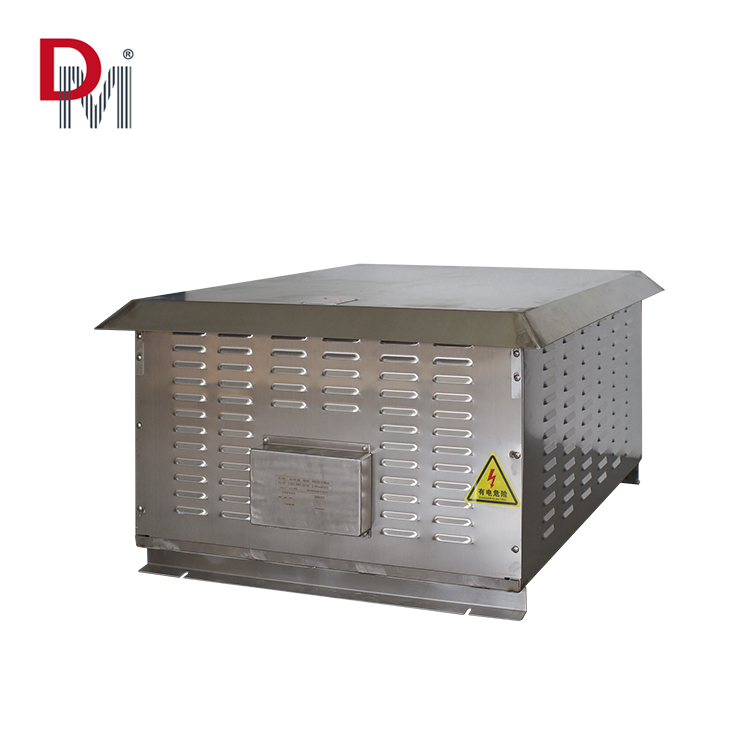
For the Rudong intertidal zone project, the inverter has passed C5M anti-corrosion certification, with a stainless steel shell and a three proof coating (moisture-proof, anti mold, anti salt spray), and can operate stably for over 20000 hours in a salt spray environment.
Adaptation to high altitude and low temperature
High altitude inverter: adapted to high-altitude and low-pressure environments through enhanced heat dissipation design (such as liquid cooling system) and low-temperature start-up function (such as -40 ℃ start-up).
Low temperature inverter: using heating modules and low-temperature lubricating grease to ensure normal operation in an environment of -30 ℃.
6、 Intelligent Control and Operations Technology
Intelligent monitoring system
Real time monitoring of inverter operation status (such as temperature, voltage, current) through sensors, combined with big data analysis to predict faults, provide early warning and optimize operating parameters.
Remote operation and maintenance platform
Support remote parameter configuration, software upgrade, and fault diagnosis to reduce on-site maintenance requirements. For example, Sunac’s iSolarCloud platform enables centralized management of inverters worldwide.