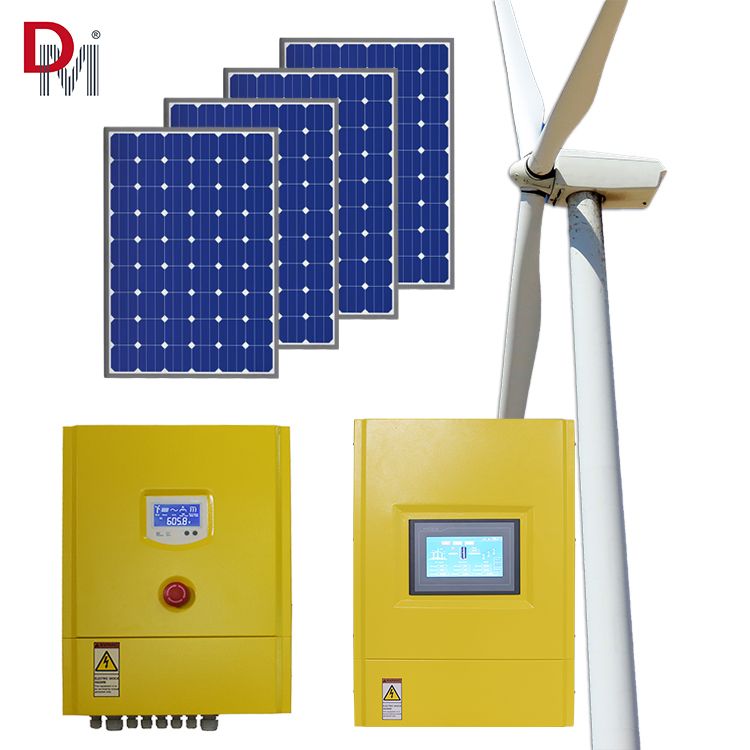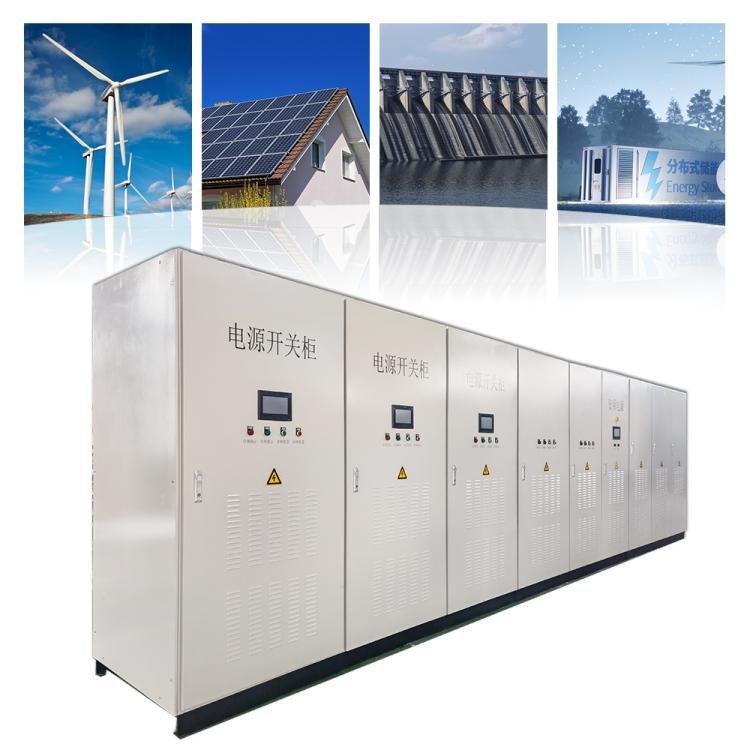
The wind solar hybrid controller, as the core control equipment of the wind solar hybrid power generation system, can be summarized into the following core functions:
1、 Energy Collaborative Management and Power Optimization
Dual energy input integration
Simultaneously processing the input of wind turbines (AC) and photovoltaic modules (DC), converting AC to DC through intelligent rectification modules to achieve unified management of the two energy sources. For example, when there is sufficient wind but weak sunlight, priority should be given to using wind energy for power generation; When the sunlight is strong but the wind is insufficient, switch to solar power supply to ensure the continuous and stable operation of the system.
Maximum Power Point Tracking (MPPT)
Adopting MPPT algorithm to track the optimal output points of photovoltaic and wind power in real time, ensuring that each power source operates at its peak efficiency. For example, the MPPT efficiency of photovoltaic modules can reach over 99%, while the MPPT of wind power generation achieves power optimization by adjusting the generator speed or pitch angle.
Power allocation and load matching
Dynamically adjust energy allocation based on load demand, prioritize the use of renewable energy for power supply, and store surplus electricity in batteries; When the power generation is insufficient, it automatically switches to battery power mode. For example, in the communication base station scenario, the controller can ensure uninterrupted operation of the base station 24 hours a day while maximizing the use of clean energy.
2、 Intelligent charging and discharging management of batteries
Multi-stage charging control
Supports adaptive three-stage charging modes (constant current charging, constant voltage charging, float charging), automatically switches charging strategies based on battery status, and extends battery life. For example, lead-acid batteries charge quickly during the constant current phase, avoid overcharging during the constant voltage phase, and maintain a fully charged state during the float charging phase.
Overcharge/Overdischarge Protection
Overcharge protection: When the battery voltage exceeds the protection threshold (such as 28V), the charging circuit is automatically cut off to prevent electrolyte vaporization and battery damage.
Overdischarge protection: When the battery voltage is below the protection threshold (such as 22V), the load output is turned off to avoid irreversible damage caused by deep discharge of the battery.
Temperature compensation function
Real time monitoring of battery temperature, adjusting charging voltage and current according to environmental temperature. For example, in low-temperature environments (below -10 ℃), increasing the charging voltage appropriately can compensate for the increase in battery internal resistance; Reduce the charging current to prevent battery overheating in high temperature environments (above 40 ℃).
3、 Load Control and Electricity Optimization
Dual load independent output
Support independent control of two loads, each load can be set with different working modes (such as light control, time control, fully open). For example, one load is used for night lighting (light control mode), and the other load is used for monitoring equipment (time control mode), achieving precise energy distribution.
Combination of light control and time control
Light control mode: Automatically switch the load based on the ambient light intensity. For example, when the sunlight intensity is below 10lux, the street lights will automatically turn on; When the sunlight intensity exceeds 50lux, turn off the street lights.
Time controlled mode: supports timed load switching and has automatic learning function. For example, the controller can record the time of dark/light every day and automatically adjust the on/off time of the street lights without manual intervention.
Gradient dimming and energy-saving strategy
Support load power gradient adjustment to avoid sudden switch impact on equipment. For example, the brightness of street lights can be adjusted according to traffic flow or time segments (such as reducing brightness by 50% after midnight), further saving energy.
4、 Security protection and fault diagnosis
Electrical protection mechanism
Reverse polarity protection: to prevent equipment damage caused by reverse polarity of solar panels or batteries.
Short circuit protection: When the load is short circuited, the output is automatically cut off and an alarm is triggered to avoid the risk of fire.
Lightning protection: Absorb lightning energy through varistors or gas discharge tubes to protect controllers and load equipment.
System status monitoring and alarm
Real time monitoring of battery voltage, current, temperature and other parameters, as well as the working status of wind turbines and photovoltaic modules. When an abnormality occurs (such as charging overvoltage or load overcurrent), an alarm signal is sent through the LCD display screen or RS485/MODBUS interface, and a fault log is recorded.
Remote monitoring and parameter adjustment
Support remote monitoring and management through Internet or wireless communication (such as GPRS, LoRa). Users can view real-time data such as system power generation, battery status, and load electricity usage, and remotely adjust control parameters (such as charging voltage and load switch time) to improve operation and maintenance efficiency.
5、 Environmental adaptability and scalability
Wide temperature working range
Adapt to extreme environmental temperatures ranging from -40 ℃ to 45 ℃, ensuring stable operation in harsh conditions such as deserts, plateaus, and polar regions. For example, in a low-temperature environment of -40 ℃, the controller can still start and manage battery charging normally.
Multiple battery types supported
Compatible with various types of batteries such as lead-acid, lithium iron phosphate, and ternary lithium, users can flexibly choose according to application scenarios and cost requirements. For example, in long-term off grid scenarios, lithium iron phosphate batteries have become the preferred choice due to their long lifespan and safety.
Modular design and expansion interface
Adopting modular hardware design, supporting functional expansion (such as adding energy storage modules, grid interfaces, etc.). For example, users can upgrade off grid systems to grid connected systems through expansion modules to achieve the function of connecting surplus electricity to the grid.