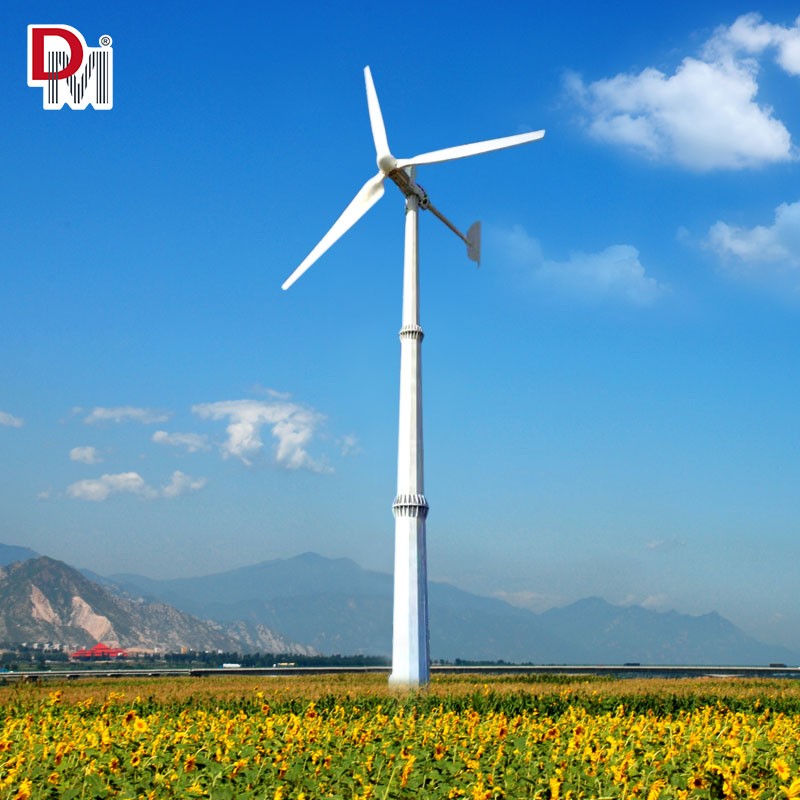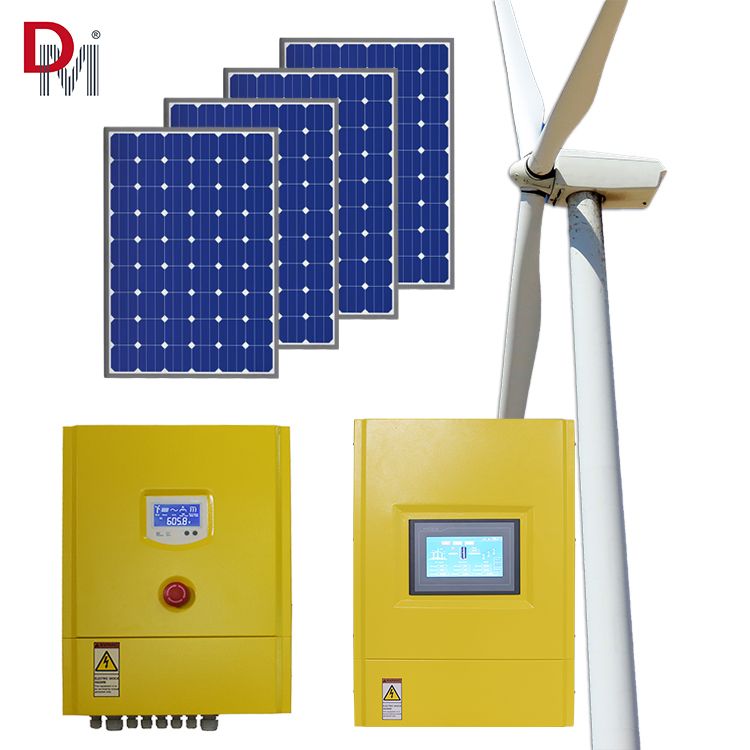
Off grid wind turbine systems can be mainly divided into two categories based on their driving methods: non direct drive and direct drive. The following is a detailed introduction to these two driving methods:
Non direct drive wind power generation system
Non direct drive wind power generation systems mainly use gearboxes to speed up wind turbines and drive conventional asynchronous generators. This type of system can be further divided into fixed pitch wind turbines and variable pitch wind turbines based on the connection status between the wind turbine blades and the hub:
Fixed pitch wind turbine: When the wind speed changes, the windward angle of the blades remains unchanged, and the connection between the wind turbine blades and the hub is fixed. This design has a simple structure, but the wind energy conversion rate is relatively low.
Variable pitch wind turbine: When the wind speed changes, the wind turbine blades can rotate around the central axis of the blades to adjust the windward angle, thereby optimizing the wind energy capture efficiency. This design improves the wind energy conversion rate, but the structure is relatively complex.
Direct drive wind power generation system
The direct drive wind power generation system does not have a gear transmission device, and the wind turbine directly drives the generator to generate electricity. This type of system typically uses permanent magnet synchronous generators, which have the following advantages:
High efficiency: Permanent magnet generators do not require electrical excitation and can achieve brushless operation without excitation losses, resulting in high efficiency.
High reliability: Due to the absence of mechanical transmission components such as gearboxes, the number of failure points is reduced and the reliability of the system is improved.
Low maintenance cost: The direct drive wind power generation system has a simple structure, easy maintenance, and reduces maintenance costs.
High power density: Permanent magnets can increase the air gap magnetic flux density, thereby improving the power density of the motor.
Direct drive wind power generation systems also have some drawbacks:
Excitation cannot be adjusted: In the variable speed system, constant voltage control cannot be achieved by the motor itself, and it is necessary to use series capacitor voltage regulation or a hybrid method combining permanent magnet and electric excitation.
High initial investment cost: Due to the use of high-performance components such as permanent magnet synchronous generators, the initial investment cost of direct drive wind power generation systems is relatively high.